
3-minute read
A Personal Story: Nonspeaking Communication in Public Spaces
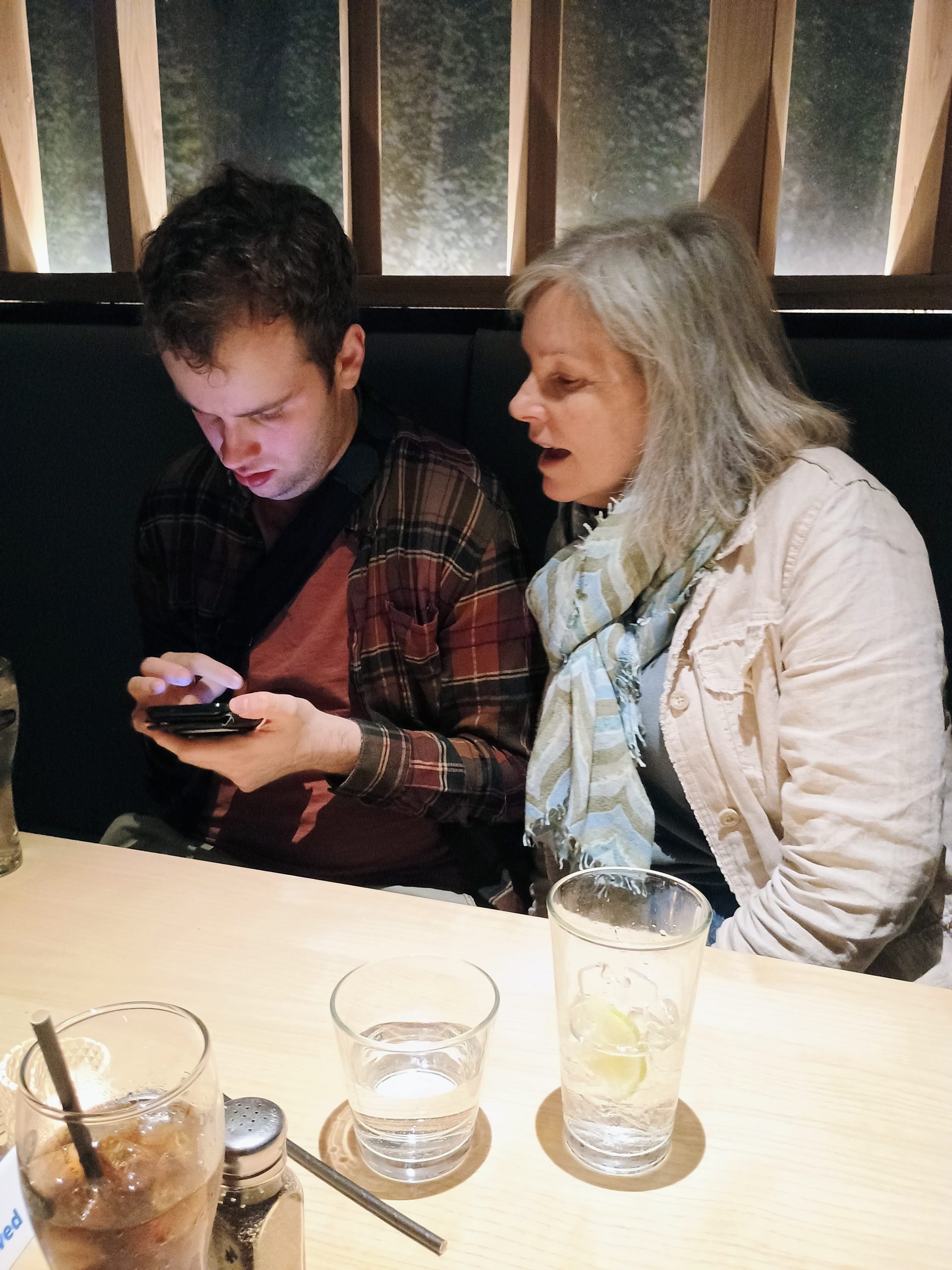
My recent Globe & Mail article turned a personal lens on the idea that disability is created in how we treat each other. If you missed the article, visit my publications link. When we devalue someone for their impairments, which refer to their health conditions or how their mind and body function, that attitude becomes the disabling factor. My son Ges (“Jess”) communicates through vocalizations, gestures, and by typing on his smartphone with voice output software. That’s just how he communicates. But his nonspeaking communication isn’t a disability until others disregard his modes of communication. His disability isn’t in his body; it’s in how others treat him.
The Caregiver Experience: How We Treat Each Other Creates Disability
If people in a waiting room could stop judging my son’s noisy presence and perhaps smile at him and me, our public experience would change. We’d feel like we matter, not that we’re an inconvenience. Others have the power to reduce barriers by shifting their perception of someone with impairments to valuing them. As a visible act of acceptance, this could change the public lives of caregivers like me.
There are many ways to be kinder. The online discussion of the article rightly pointed out that it’s not just caregivers of young people with disabilities. Some also talked about the nonstop, problem-solving challenges many face when caring for elderly parents. Usually without any support. It’s tough.
Why Your Annoyance Says More About Expectations Than Behaviour
What would be more supportive in a public space? Some online comments mentioned children acting out. Every parent has “been there.” Behaviour is communication. Behaviour makes sense to the person doing it; it fills a need. They’re not acting out to annoy you. Why are you annoyed? Because the behaviour is unexpected. Your reaction is really about that disconnect, not about the behaviour of people doing something unexpected.
You might expect a waiting room to be quiet. It’s not. An annoyed reaction is only about that gap in expectations; it’s not really about my son. Social norms serve important purposes by providing safety nets and shared guidelines for social behaviour. However, they can also become restrictive, creating rigid expectations that leave little room for flexibility. The next time you feel annoyed by someone like Ges, pause and ask yourself: What about the situation is really bothering me? Often, the irritation reveals more about your own expectations than about the other person’s behavior.
So, if you have a friend or loved one in a complex caregiving role, whether it’s someone like my son or someone with acquired impairments such as elderly relatives, how can you be supportive?
5 Practical Ways to Support Caregivers in Your Life
- Offer Concrete Assistance
Instead of asking “What can I do?”- Mention a specific errand you’re already planning (e.g., “I’m heading to the grocery store tomorrow…anything on your list I could grab?”).
- If you know the person being cared for, suggest a low‑key activity you can do together (e.g., “Would you like me to take them out for coffee or ice‑cream this afternoon?”).
- Be Reliable and Persistent
- A single “no” doesn’t mean the offer isn’t appreciated.
- Show up for small, repeatable tasks (dropping off a meal, running a quick pharmacy run) and keep the habit going.
- Consistency beats occasional grand gestures; a modest, ongoing commitment often makes the biggest difference.
- Avoid Unanswerable “What‑If” Questions
- Steer clear of speculative queries (“Will they get better soon?”).
- Focus on what you can do right now rather than trying to predict the future.
- Listen First, Advise Later
- Give the caregiver space to talk freely without immediately jumping to solutions.
- Offer empathy and validation (“That sounds exhausting”) and only share advice if asked.
- Provide Respite When Possible
- If you’re comfortable caring for the person they’re looking after, arrange a short‑term relief (an evening or a weekend).
- Make sure the caregiver knows they have a trusted backup, allowing them to rest, attend appointments, or simply recharge.




0 Comments