
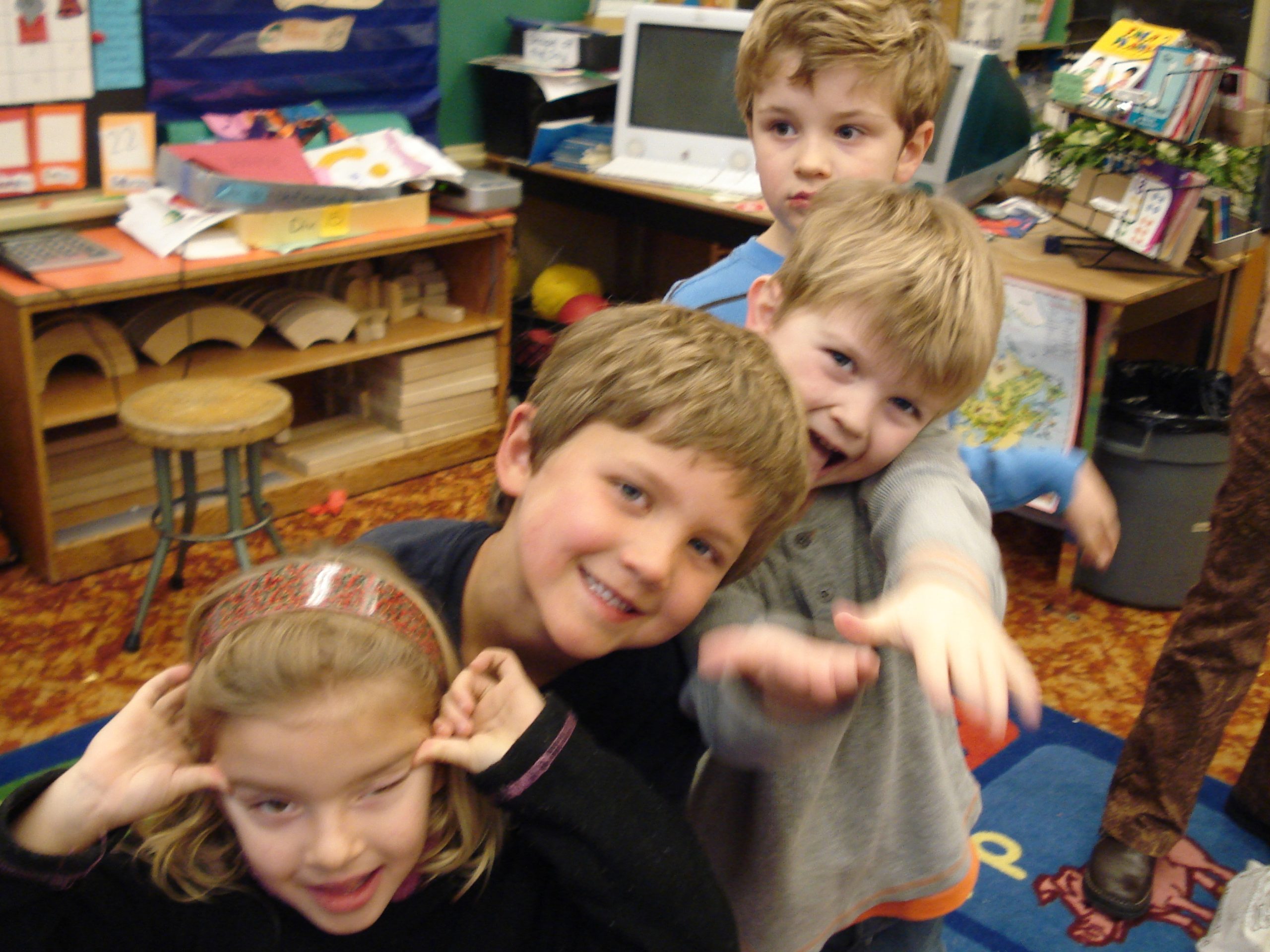
Peer‑led inclusion is the catalyst that turns a classroom from a collection of individuals into a supportive community. When schools prioritize peer‑led inclusion, they shift the focus from trying to change a child’s behaviours to reshaping the surrounding environment. This article shows how that approach helped my son Ges (“Jess”), a child with multiple disabilities, move from isolation to genuine inclusion.
Why Noticeability Matters: Early Steps Toward Inclusive Play
In my last article, we touched on ways to shift stories about impairment from “disability created by the individual” to “disability constructed by society.” This was in the context of communication differences, but the reality is that Ges’s impairments include an array of physical, social, and intellectual ways his body and mind work. Their complexities might make it easy to notice him but dismiss his gifts. To treat him as if he didn’t matter.
Here’s a story of how his kindergarten friends moved from legislated inclusion to true mattering. He’d started the school year isolated, playing with spinning toys by himself, his presence tolerated but largely ignored. I asked the school to start a small playgroup to help Ges learn social skills from his peers that adults can’t teach. Kids are the best teachers.
Practical Steps to Foster Peer-Led Inclusion in Kindergarten
The school agrees that I can send a letter home to parents about Ges. The visibility of his disabilities would spark curiosity (Gordon Flett’s first pillar of noticeability), and without my information, families would create their own assumptions. I’d rather they had some part of our truth. While I keep Ges home one morning, we hire our consultant to go into the classroom to help the children understand what it might feel like to be him. The consultant calls these “demystification sessions.” Under the consultant’s guidance, Ges’s classmates try to follow a simple maze while wearing oven mitts. They find it difficult. Then, they’re given larger mazes with thicker pencils. Or they’re asked to catch a tennis ball with cardboard arms and big mittens. After some frustration, they try with a lighter, softer ball and succeed more. The consultant explains that even though Ges’s brain tells his muscles what to do, his muscles don’t always listen. And how tough that might feel. And how helpful some adaptations could be.
“Mom, I just know what it feels like to be Ges!” one child announced afterwards, pressing her palms to her heart to convey this vital aspect of her school day to her mother. The playgroup launches successfully, so by late October, a small group of children becomes very interested in Ges. They play hide-and-seek, tag, and swing on the swings. They’re happy.
Friendship in action: the girl applies a social‑skill strategy she practiced, inviting her classmate to join her in play on the alphabet carpet
From “Too Much Hugging” to Meaningful Connections
Months later, perhaps into Grade One, I happened to be in the school corridor just before it’s time to collect Ges. The learning support teacher approaches with that look I’ve seen before on therapists’ faces. The one they use when they have to tell me something hard. Something they know will probably cause pain. I steel myself: quiet my mind, focus on the teacher. I’m ready.
“Ges hugs the other kids too much. They’re getting upset with him,” she says. “We have to intervene before he drives them away.” Okay then. “We’re going to need a behaviour treatment program for too much hugging,” she concludes. Wow, too much hugging, that’s not too bad. Still, I agree he’ll have to hug his peers less.
Designing An Environment for Peer-Led Inclusion
Back home, almost giddy with relief, I telephone our behavior consultant for advice. His earlier sessions had been well received; perhaps he could help again. Using a natural, activity-based approach, we decide that Ges’s behaviour — like all behaviour — made sense to him but wasn’t creating the connection he wanted. Ges needed to learn how to build the peer relationships he desired. Our family would need to pay for our behavior consultant to provide classroom-based opportunities for Ges’s peers to practice friendship skills because peers teach best. The school staff agrees everyone would benefit.
Over several weeks, small groups of classmates learn how to pay attention, use simple sentences, offer choices, demonstrate good playing, ask questions, take turns, give encouragement, and describe their actions. They learn it’s okay to touch Ges on the shoulder. During the weeks that follow, small groups of classmates understand that using short sentences and giving extra time to respond is helpful. They watch Ges to see what he enjoys doing. Through repeated sessions, kindergarten classmates learn to offer two options: “Ges, do you want to play cars or trains?” and show different ways to play with each choice. They tell Ges what they are doing when playing, and ask questions to get to know Ges better. As their play progressed, they became skilled at offering encouraging words like “good job” and “nice try.”
Investing in Environment Over Therapy: Real‑World Outcomes
Environment‑driven joy: Ges’s train‑car box on the alphabet carpet shows how peer‑led inclusion creates a happy space for him to join the fun without trying to change him.
The goal was never to “fix” Ges. Instead, it was to teach his peers how to befriend him and, by doing so, gain skills to succeed as attentive playmates for anyone. It provided Ges with extra structure — the scaffolding — he needed to see that his classmates’ play had interesting potential. The purpose was to help Ges get what he wanted and, since his interests seemed limited, to see whether his range could expand. The sessions with the oven mitts, along with lessons on friendship skills, laid a foundation that would benefit them throughout their time together in elementary school.
This was the smartest therapy money we ever spent. Instead of investing in therapies aimed at changing Ges, we put that money into shaping his environment. In a more understanding space, he could truly be himself. His friends also became more inclusive, and he grew better at feeling included. Inclusion isn’t about legislating people to be together. It’s like love…it’s a verb. You have to act on it to really feel it.
Replicating Peer-Led Inclusion in Your School
In these ways, these young children transformed their kindergarten experience into an inclusive environment that fostered appreciation, respect, and valuing one another. Ges was valued as much, perhaps more, than any child in the classroom. True mattering, kid-style.

Such inspiring stories you bring us, Carmen. Thank you for giving us new eyes to see with.
Thanks for reading!
Insightful article – i did not have the advantage of integrated classrooms that would have allowed me the ability to understand Neurodiverse individuals. Though i can never fully understand Ges epistemic experience you have provided through words, the possibility of placing myself in his shoes. Kids these days are way more informed which allows for a truly inclusive environment for all to share
Thanks for reading Brian. As far as integrated classrooms go, I didn’t either. In my classrooms and playgrounds, there were no Geses. 🙁
very informative and practical.
Thank you, Elly.