
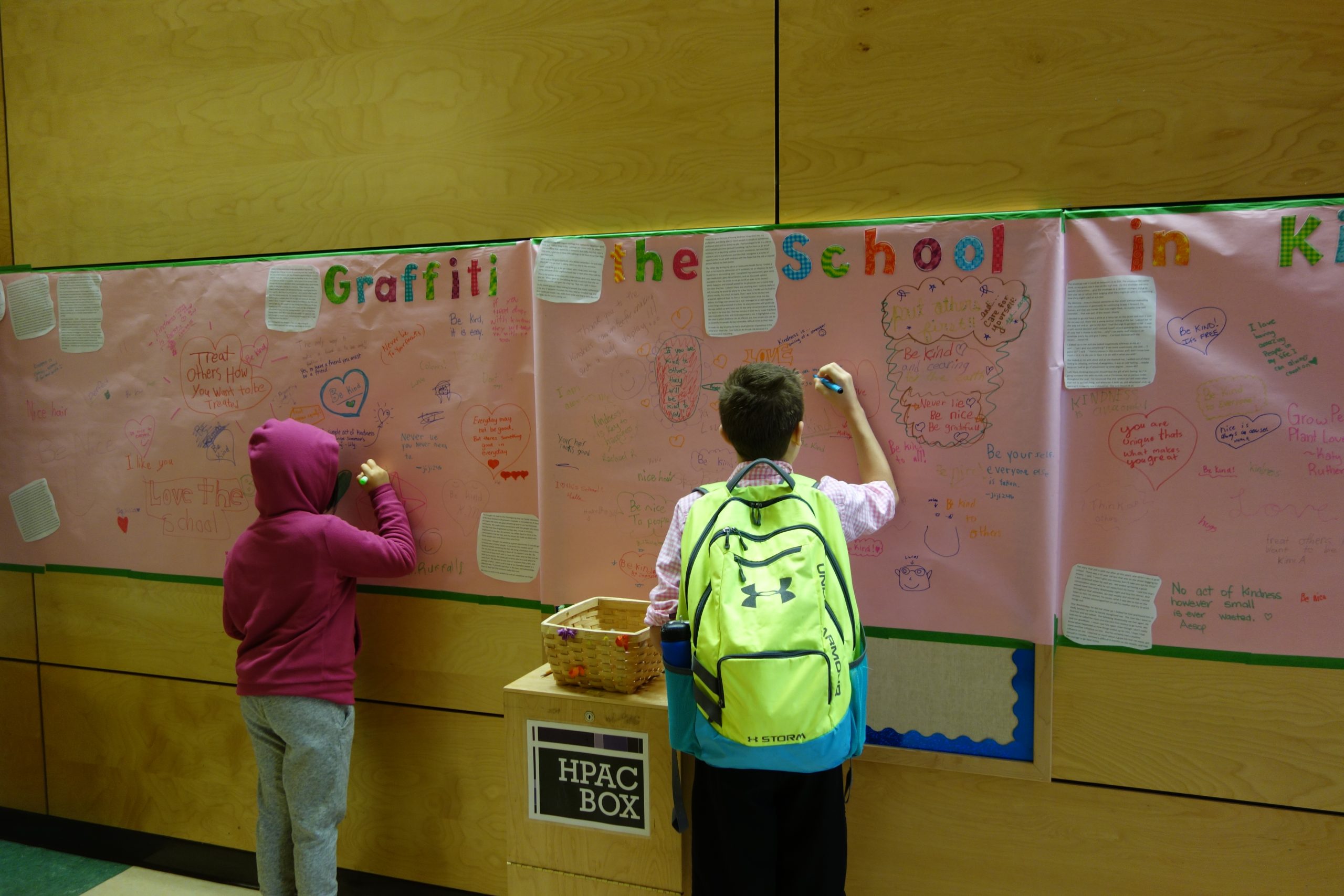
In an elementary classroom where peer‑led inclusion guides daily interactions, the whole school becomes a place of transformative, genuine kindness.
From Pink Shirt Days to Real-World Inclusion
This week, there’s been a lot of talk about pink shirt days and raising awareness of anti-bullying efforts. To my knowledge, my son Ges (“Jess”) was never bullied. For my Gen-X generation, that’s remarkable. My personal experience was that the playground could often be a cruel, exclusive place full of taunts for anyone considered “not normal.” Difference was intolerable.
In the last article, we looked at how the two pillars of Gordon Flett’s mattering concepts (being noticed and valued) came together into the kindergarten classroom, where Ges felt he mattered. However, critics might argue that’s fine; that benefited one child—he felt noticed and included—but what about everyone else? I can assure you, they felt they mattered as well.
Guiding Peer-Led Inclusion Sessions in Grade Four
The consultant seats the kids in a circle to discuss differences, challenges, and abilities. He reminds them of Ges’s reading and computer abilities, and outlines his gross and fine-motor skill challenges and speech difficulties. He talks about how Ges wants to speak, run, and write like his friends, but when his brain tells his mouth, hands, and feet to act, they don’t do what he wants. And how frustrating that must be.
The kids read a simple typed message privately, then are tasked with passing it on to a neighbour without using words. Something simple: “Trevor Linden plays for the Vancouver Canucks.” The other kids try to guess, and pictures and gestures provide an adaptation when they can’t.
Each session, they conclude with a talking circle about how that felt and how it might be for Ges, who primarily uses voice-output software on his iPad to communicate. They brainstorm ideas for adapting playground and classroom activities. If anything, the kids’ response could be too understanding and overly helpful, but they try harder to play and interact with Ges.
The truth is that Ges acts in unexpected ways. To make sense of his behaviour, it would be human nature to make up a story about why he does what he does. I wanted his peers to craft a supportive, generous story, so we are happy to pay for the consultant to spend time with Ges’s classmates. Their understanding of Ges won’t be a fiction of an “aloof” child who doesn’t care about contact with others. It will be a real account of who their friend is, with his complexities and gifts.
Friends’ Perspectives and Every-Day Acts of Kindness
And he truly is their friend. I discern the laughter and smiles between him and his friends, and the ongoing circle of affection and joy they find in each other. It’s friendship, Ges-style. I see the natural, instinctive connections he creates, and how, in their eyes, he’s not broken. What matters to them is their shared interests and that it’s safe to be themselves with him. Being kind is what matters.
They only care about a sense of play, fun, and the ability to stay in the moment of the game’s rhythm. They don’t need chatter. With him, they don’t have to negotiate to have their way or figure out whose rules are worth following. I momentarily recall the feeling of uncertainty on the playgrounds of my childhood if there were no close friends nearby, or if a bully had me in their sights. Into adolescence, there was the need to be a certain way, be cool, or be competent. Be perfect.
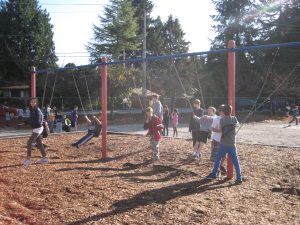
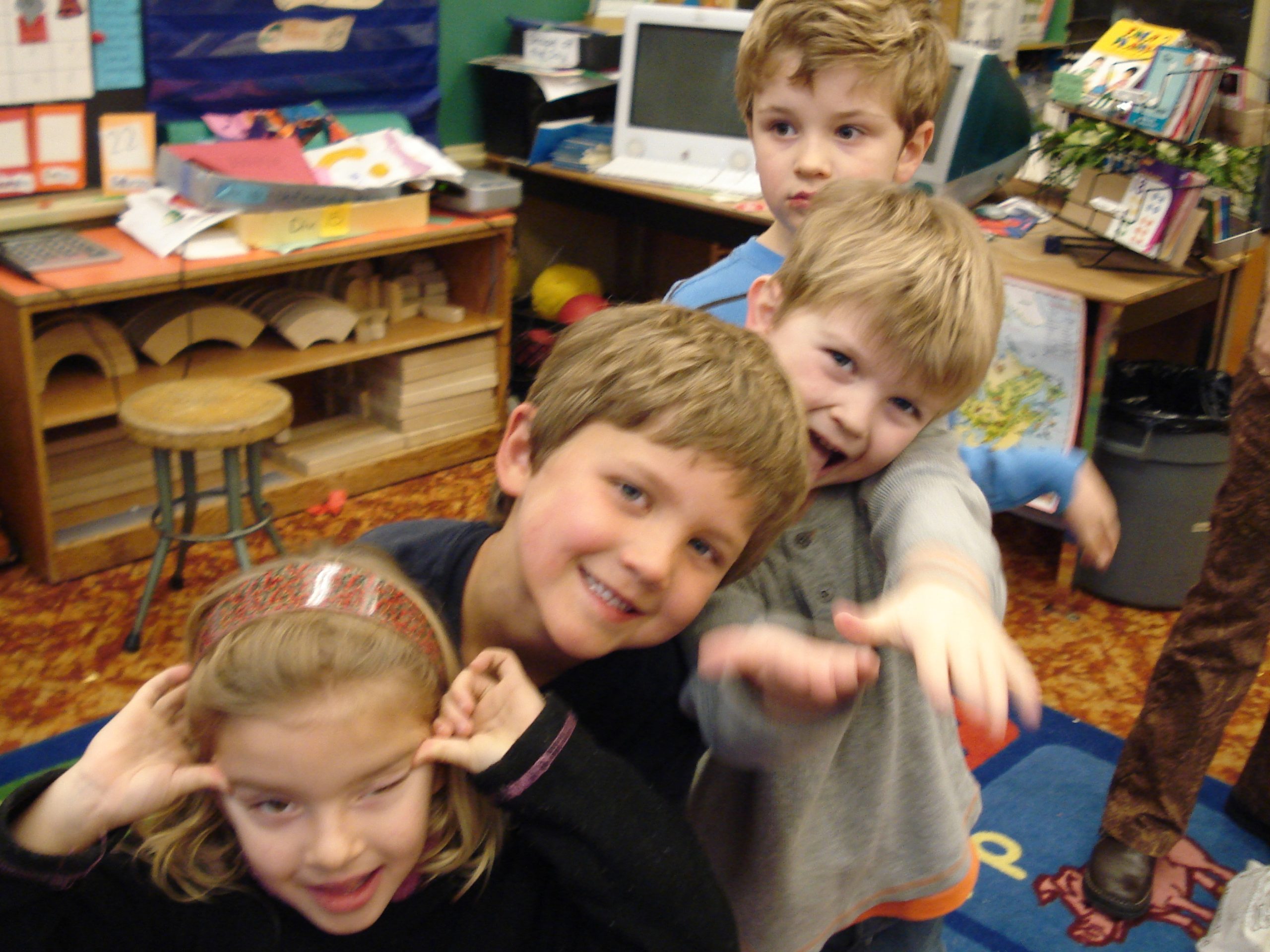
Kids share a swing‑set moment, embodying the peer‑led inclusion that fuels school‑wide kindness.
These kids know, I realize. They have wisdom I never had. They know the paths they walk are different but the same. More challenging for my son, perhaps, but in their eyes, not less than. Small tears pool at the corners of my eyes as I experience Ges and his friends in the shorthand of their childhood, forged on the swing set and in the sandbox. Their silliness, easy laughter, and exuberant sense of life were currencies they traded freely and without judgment. The small children, with their big wisdom, expand my heart.
To them, their friend was different, but different like eye or hair colour. There was no judgment. To Ges’s friends, he was different, yes, but never less than them. In their eyes, he was, and is, perfect.
How Ges’s Inclusion Fuels School-Wide Kindness
Ges’s peers became more accomplished in their friendship skills by learning to relate to differences. Someone’s different ability isn’t a fixable, labelled abnormality. It’s a materiality to understand. The adaptations the children learned served as handling instructions for Ges and others like him. Ges’s autism designation (he still lacked a diagnosis) became a portal for inclusion that secured the care and attention he needed, taught his classmates about compassion, and created caring relationships between them that lasted throughout their schooling.
Moreover, their joy spread throughout the school, inspiring kindness initiatives in other classrooms, expanding empathy and kindness titles in the library, and sparking similar initiatives within the parent group. Many, it seemed, wanted some of what Ges’s friends had learned. Everyone benefits when everyone feels they matter.
Volunteer parents will invite students to pick a kindness fortune from one of these buckets, and put it into action during the day.
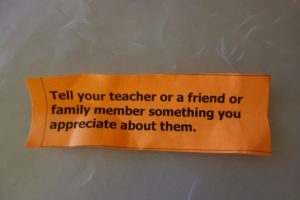
An orange kindness‑fortune slip, taken from a bucket, inspired a student’s random act of goodwill to write on the hallway board.

Carmen,
This may be the best blog you have ever written … no pressure re upcoming posts 🙂
Jes could not have asked for a more beautiful and caring mother!
Thank you for sharing your difficult heartfelt path,
Thank you for reading, and for your generous comments!
As usual , you take us through all the emotions and help us clearly understand the various stages of development that you and Ges went through together. Ges is so lucky to have such an amazingly talented mom.
Thank you for reading Elly!